The primary care market, worth $260 billion today, is red-hot and getting hotter. Especially in recent years, large primary care groups have faced skyrocketing competition from urgent care facilities, startups and big corporations to offer health services. Amazon and CVS have both acquired and forged partnerships with primary care providers to break into the market.
By 2030, these nontraditional players could make up one-third of the US primary care market. Retail behemoths alone could account for up to 10 percent of total primary care.
To get ahead in this challenging and evolving environment, it’s critical for large primary care groups to cement themselves as the provider of choice for patients with ever-expanding options. Luckily, the solutions are straightforward and data-driven, as Zocdoc research can attest.
Is your practice easy to find and simple to book?
Join Zocdoc to turn patient interest into booked appointments.
1. Know your patients.
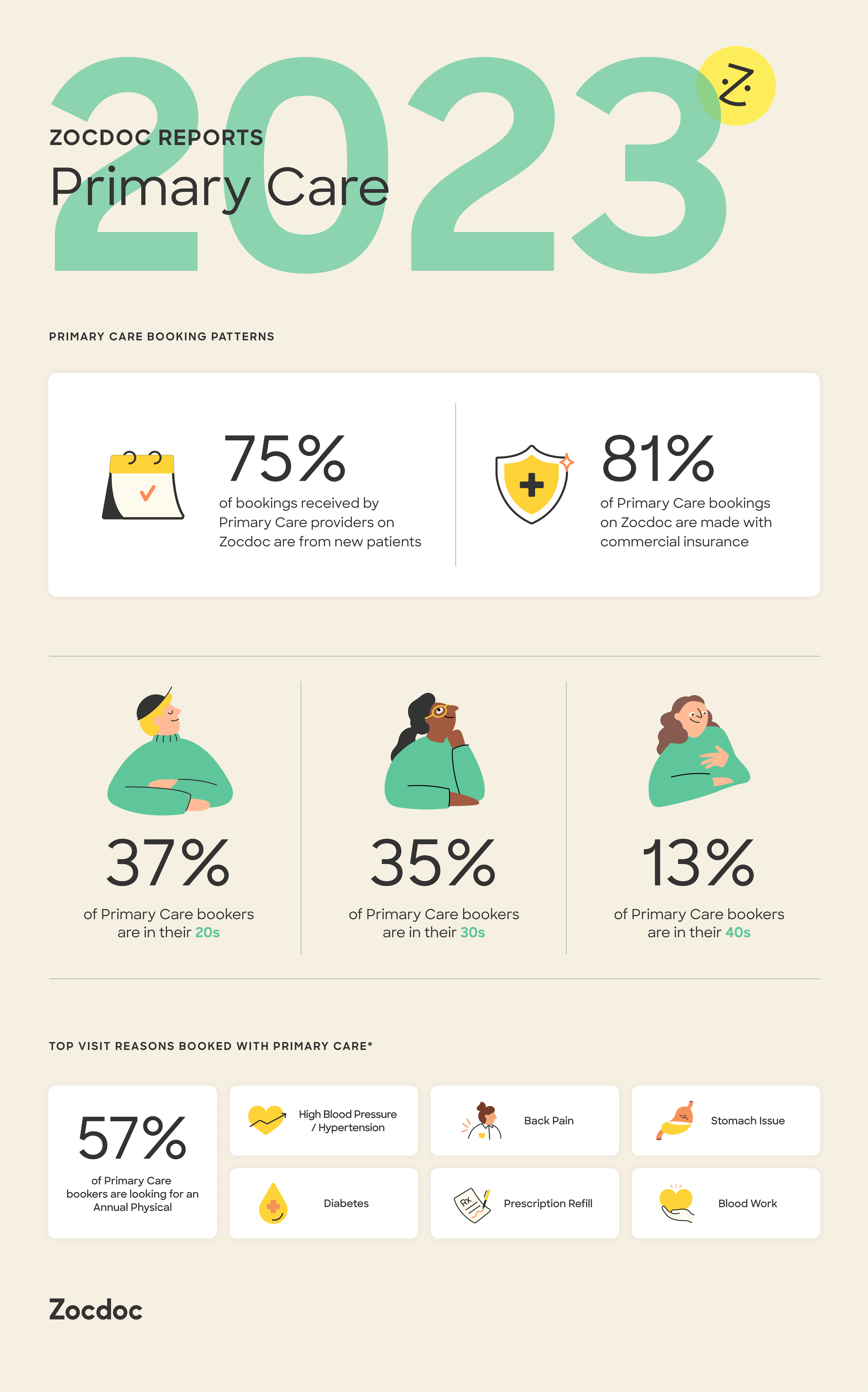
Zocdoc data show that 37 percent of primary care bookers are in their 20s, with another 35 percent in their 30s and 13 percent in their 40s. Almost 60 percent of primary care bookers overall are simply looking for an annual physical.
2. Your patients are online.
Caring, efficient, seamless service is core to staying ahead for PCPs; to make that happen today, technology is no longer optional. A recent Zocdoc survey showed that 80 percent of respondents said they’re more motivated to book an appointment if they can do so online. When it comes to choosing a new healthcare provider, 76 percent of millennials said they’re more likely to choose someone who offers online booking as a part of their practice
3. Your patients rely on their smartphones.
In 2023, around 66 percent of appointments booked through Zocdoc were made on mobile devices, compared with 34 percent on desktop computers. Mobile booking has grown by nearly 20 percent over the past five years.
4. Your patients want to choose how to meet, virtually and in person.
While primary care patient preferences continue to shift back toward in-person care, providers shouldn’t discount telehealth altogether. Flexibility is crucial for today’s patients. Seventeen percent of Zocdoc bookings for PCPs are currently for virtual appointments — more than all specialties except urgent care and mental health, and far higher than pre-pandemic. Primary care can sometimes function as triage and may not always require a physical exam, which means offering both virtual and in-person options is a must.
5. Your patients benefit most from anytime booking and near-term availability.
Patients want to schedule their primary care appointments any time, not just during office hours. They also don’t want to wait weeks to see their doctor, making near-term availability essential. The typical appointment on Zocdoc takes place within 24 to 72 hours of booking. Nearly 40 percent of appointments are booked outside working hours, between 5 p.m. and 9 a.m., while one-fifth are booked on Saturday.
6. Know your numbers and how to use them.
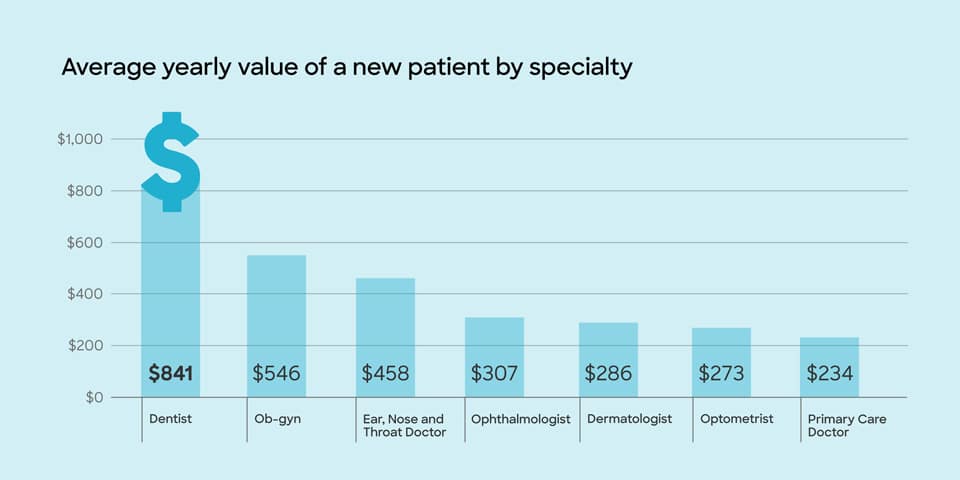
In a recent white paper, Zocdoc surveyed 351 medical groups and 11 health systems to determine the average first-year value of a new patient, based on records from those businesses. By specialty, we found that on average, primary care patients drive less first-year revenue than other specialties. This means that efficiency should be a top concern in a practice’s patient acquisition channels.
7. Optimize your acquisition channels.
Search engine marketing is a key channel by which primary care groups acquire patients. Patients seeking out provider care are, in marketing jargon, using search terms and keywords known as “high intent” — they’re actively looking to complete a transaction. That makes search engine marketing a particularly potent tool for primary care practices. Here are eight quick tips to help primary care providers succeed in SEM — and one major consideration that will help your practice get ahead.
8. Learn from your peers and competitors.
As the primary care landscape continues to evolve, patient behavior will continue to drive how large primary care groups need to respond. Staying competitive — or regaining lost footing — depends on closely understanding a practice’s metrics and marketing channels. Zocdoc is ready to help primary care providers with data-driven solutions and insights. Consult our enterprise sales representatives to learn more about how Zocdoc can help you grow your business.
Join the platform patients trust
Attract new patients, fill your schedule, and become bookable everywhere patients look for care.