
By Lauren Gelman, Content Marketing Manager, Editorial at Zocdoc
As a primary care doctor, Jane Zhu was used to helping patients figure out what kind of care they needed next. For patients with depression, anxiety, or more complex mental health needs, she would often recommend therapy, counseling, or psychiatric care.
But when her patients turned to provider directories — the lists of clinicians their insurance plans said were in-network — they encountered one roadblock after another. Patients have to make more than a dozen calls, she says, only to find they couldn’t get through or make an appointment.
Months later, some would return to Dr. Zhu with no progress. The search was hard enough on its own. Layered on top of the serious medical or mental health issues patients were already facing, “often they just give up.”
Key takeaways
- Ghost networks happen when doctors appear in an insurance directory but patients cannot actually reach, book, or use them for in-network care.
- Research shows inconsistencies in 81% of entries across directories from five large national insurers, showing how unreliable provider listings can be.
- In a Zocdoc study, provider phone numbers in a government directory led to new-patient appointments only 38% of the time, even though every provider had online appointment availability.
- The real measure of access is not whether a provider appears in a directory, but whether a patient can actually book care when they need it.
When ‘in-network’ is out of reach
If you’ve ever searched your insurer’s directory, found a clinician listed as in-network, and then discovered the phone number was wrong, the office was not taking new patients, the provider no longer accepted your plan, or the next appointment was months away, you have encountered the widespread problem that researchers and advocates call ghost networks.
Provider directories are supposed to show patients where they can find a doctor. Too often, they show something much narrower: which providers belong to an insurance network on paper. Dr. Zhu, who is an associate professor of medicine at Oregon Health & Science University and studies access to care, puts the mismatch simply: “What the insurance company is often tracking may not be the same thing that the patient needs.”
What patients need is an appointment, but just because a provider is listed does not mean they are available to book one.
Whether the problem is outdated contact information or a doctor who no longer takes the insurance plan or accepts new patients, the result is the same: care appears available, then vanishes like a ghost when patients try to use it.
Virtual Event: The AI Exam Room
4 healthcare voices, 1 big question: Is AI improving care?
The difference between coverage and care
The distinction between having insurance coverage and being able to use it is central to how psychiatrist Robert Trestman, MD, thinks about ghost networks.
“Coverage just means you have an insurance policy,” says Dr. Trestman, former chair of the American Psychiatric Association’s Council on Healthcare Systems and Financing and a Professor and Chair of Psychiatry at the Virginia Tech Carilion School of Medicine and Carilion Clinic. “Access within that policy means that you can be seen in a clinically appropriate time by a clinically appropriate expert.”
For years, researchers, regulators, and policymakers have been tracking and analyzing ghost networks through secret shopper studies, directory audits, and claims-data research. Each method tests the same basic promise from a different angle. When a clinician appears in a network, can a patient actually reach them and get care?
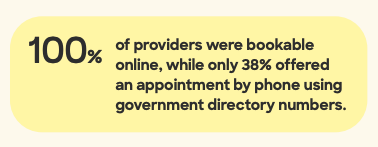
A recent Zocdoc study examined that question through the lens of appointment access. The nationwide study included 1,042 providers both listed on Zocdoc and in a government directory. When secret shoppers called those providers using numbers from the federal data, they were offered a new-patient appointment only 38% of the time.
But 100% of the providers in the study could be scheduled online, suggesting that the problem was not always appointment supply, but whether patients had a reliable way to reach it.
That is what makes ghost networks so hard to identify and fix. Unless a directory reflects what a patient can actually do next — confirm their specific insurance plan is accepted, find a provider taking new patients, and schedule care — the directory can overstate how much access the network provides.
Why do ghost networks happen?
A directory listing can break down in several different ways. A clinician may have moved, retired, left an insurance network, stopped accepting new patients, or have very limited appointment availability. Some listings are simply outdated. Others may be technically accurate for billing or contracting purposes, but still misleading for a patient trying to book care.
“We lump it all under ‘ghost networks,’ but there are a lot of different causes,” says Mika Hamer, PhD, a health services researcher and assistant professor of health policy at the University of Maryland.
Many different causes also means there is no single fix. Correcting a phone number, updating insurance participation, opening a patient panel, and making appointment availability visible may be related, but they are not the same problem.
It helps to separate the different failures that can all lead to the same result: a patient who has insurance coverage, but still cannot get an appointment.
- Outdated contact or location information. A provider may have moved, changed practices, retired, or stopped working at a listed location. In a JAMA study of directories from five large national insurers, 81% of entries contained inconsistencies, showing how quickly directory data can drift from reality.
- Insurance participation that changes or is hard to verify. A provider may accept some plans from an insurer but not the specific plan a patient has, or may have left a network while still appearing in a directory. For patients, the distinction may not become clear until they call the office or receive a bill for out-of-network charges.
- Not accepting new patients or unrealistic wait times. A provider may be correctly listed and take insurance, but may not be accepting new patients — or may not have an appointment available for months.
- Listings built for billing, not booking. Some directory entries may be technically accurate for contracting or reimbursement, but misleading for patients. For example, group practices may list clinicians across multiple locations because of billing arrangements, even if those clinicians rarely practice at those sites.
Together, these issues make ghost networks more than just a data-cleanup problem. “You’re trying to solve a dynamic issue with a static solution,” Dr. Zhu says.
Fixing that requires more real-time ways to verify whether a provider still takes a plan, has availability, and can actually schedule care.
Attract more new patients
Patients are searching for care in your specialty. Are you showing up?
When the insurance network looks better than it works
The challenge is also one of accountability. Providers, insurers, vendors, and regulators may all touch pieces of the information patients rely on. But when the information is wrong or incomplete, it is not always clear who is supposed to fix it.
“The biggest problem is no one’s really responsible,” says Daniel Polsky, PhD, Bloomberg Distinguished Professor of Health Economics at Johns Hopkins University. He traces the problem to an information flow that does not keep up as clinicians move, credentialing lags, contracts change, and providers come in and out of networks. Insurers may rely on provider groups to share accurate information, but insurers are ultimately responsible for the accuracy and utility of directories consumers use to choose and navigate their plans.
The result is a system where information may be true at one point, then quickly fall out of date — with no reliable provider-by-provider process to keep it current.
Dr. Polsky also cautions that directory accuracy alone is not the same as usefulness. A listing can be technically correct and still fail to answer the questions patients actually care about: Is this provider accepting new patients? Can I get an appointment soon enough?
The stakes go beyond an inconvenient doctor search. Provider directories also help patients compare plans when purchasing insurance and help regulators judge whether insurance networks have enough clinicians to serve members (known as network adequacy). If the directory has errors, the network itself can look more robust than it is.
Dr. Trestman sees that as one of the central risks. If an insurer can point to a directory full of clinicians, it may appear to have an adequate network even when patients cannot get appointments with those clinicians.
In that sense, ghost networks obscure whether coverage is functioning as access. When the system fails to answer that question clearly, patients and practices are left to deal with the consequences.
What is the patient burden from ghost networks?
“The person that’s really bearing this is the patient,” says Simon Haeder, PhD, an Ohio State University health policy researcher who studies healthcare access and provider networks. Dr. Haeder says the issue is not confined to one specialty, state, or insurer. Some plans and markets may perform better than others, but the pattern shows up broadly enough to make ghost networks a systemic access problem.
For patients, that systemic failure translates directly into delayed care. Instead of securing prompt appointments, individuals often spend days, weeks, or even months searching for an in-network clinician who can actually see them. In 2023 testimony before the U.S. Senate Finance Committee on ghost networks, Dr. Trestman described patients who could not find anyone to answer the phone, return a call, or offer an appointment. When offices did have openings, he noted, wait times could stretch from eight to 10 months rather than days or weeks.
Patients must repeatedly call offices, leave messages, verify plan participation, ask about new-patient availability, compare conflicting answers, and start over every time a listing leads nowhere. In Zocdoc’s study, even among valid phone numbers, more than 25% of calls were not picked up, illustrating how the search often stalls before a patient can even reach a human voice.
This becomes particularly problematic when options are already narrowed. As Dr. Hamer noted, in rural areas, lower-resourced communities, or medical specialties with limited supply, an inaccurate listing can meaningfully shrink the number of accessible clinicians, sometimes down to zero.
Beyond the time and effort spent searching, ghost networks introduce severe financial risk and emotional strain. A patient may select and see a clinician they believe is in-network, only to learn later that the provider does not accept their specific plan, exposing them to unexpected out-of-network costs.
And over time, these repeated dead ends erode trust in the healthcare system. In his testimony, Dr. Trestman described patients who felt rejected or blamed themselves after repeated failed attempts to find care, with some eventually giving up on seeking treatment altogether.
What is the provider impact from ghost networks?
Patients bear the clearest burden from ghost networks, but practices can also get caught in the same broken information loop. When an inaccurate directory sends patients to the wrong place, practice staff often end up helping would-be patients navigate the fallout, generating an influx of unnecessary calls and administrative work.
Dr. Zhu says that burden can be especially heavy in behavioral health, where many clinicians work in solo or small-group practices without much administrative support. In those settings, handling phone inquiries, insurance verification, credentialing, and directory updates directly cuts into clinical time.
Maintaining accurate directory listings presents its own massive operational hurdle. Practices must manage credentialing, directory updates, and plan information across dozens of insurers, products, and shifting timelines. Dr. Trestman testified that his own team needed dedicated staff time just to keep clinicians credentialed and in-network with payers. Nationally, it is estimated that sending directory updates to insurers costs physician practices $2.76 billion annually.
When directory listings are inaccurate or outdated, practices also risk real reputational harm. Patients may blame the clinician or practice when information is wrong — even if the practice has no control over the directory itself. As Dr. Trestman warned, these failures threaten to damage the foundational trust between patients and clinicians: “If there’s no trust, there’s no clinical care.”
These combined friction points reduce the incentive for providers to participate in insurance networks altogether. Directory maintenance acts as one more requirement layered on top of the broader administrative burden of accepting insurance, a weight Dr. Zhu noted is especially heavy for solo practitioners and small groups.
Over time, this creates a dangerous feedback loop: the harder it is for providers to remain in-network, the fewer real in-network options patients ultimately have.
How can you avoid ghost networks? Beyond the workarounds
Ghost networks are a systems problem — and workarounds should not be a patient responsibility. But while directories remain unreliable, a few extra checks can help people avoid some of the most common dead ends.
- During open enrollment, check the doctors you already know you need. Dr. Polsky says patients shopping for insurance often care most about whether their existing doctors are in network. Asking the doctor’s office directly can be more reliable than relying only on a directory, though no patient can realistically predict every specialist or service they may need later.
- Verify the details that determine real access. Ask whether the provider accepts your exact plan, whether they are accepting new patients, and how soon the first available appointment is. A listing is only useful if it leads to care you can actually schedule.
- If the search keeps failing, document the dead ends and go back to the insurer. Keep notes on wrong numbers, unanswered calls, closed panels, long waits, or offices that say they do not take the plan. That record can help when going back to the insurer to ask for an in-network option that is actually available.
But a functioning healthcare system should not depend on patients making repeated calls to find out whether their coverage works.
Is your practice easy to find and simple to book?
Join Zocdoc to turn patient interest into booked appointments.
Fixing ghost networks: Real access, real-time info
The deeper fix is not simply a more up-to-date spreadsheet. Directories need to move closer to real-time information about whether a provider is active, accepts a patient’s specific plan, has an open panel, and can offer an appointment in a reasonable timeframe.
In a JAMA paper that Dr. Zhu recently co-authored, she argued that provider directories need to do more than list who is contractually part of a network. A better directory would distinguish between network participation on paper and active clinical availability.
A national provider directory could be one way to reduce fragmentation. Dr. Zhu’s paper notes that federal officials have explored a national directory to centralize provider information, standardize updates, and add more patient-centered details, such as whether clinicians offer telehealth, speak particular languages, or accept new patients. But the value of any directory — national or otherwise — depends on whether it can keep pace with real access, not just organize static information more neatly.
That requires fresher, more useful information than a periodic directory update can provide. Dr. Zhu points to other sectors — from Google Maps to review platforms like Yelp — where businesses, users, public agencies, and technology systems help keep information current.
A more useful model would verify access closer to the moment patients actually seek care. A successful real-time appointment booking can serve as a live signal that a provider is active, reachable, accepting patients, and offering availability, which is the kind of information a static directory struggles to capture.
Ghost networks reveal why the measure of access cannot be whether care appears in a directory. It has to be whether a patient who needs care can actually get an appointment.
For more information, download Zocdoc’s white paper The End of Ghost Networks.