By Lauren Gelman, Content Marketing Manager, Editorial at Zocdoc
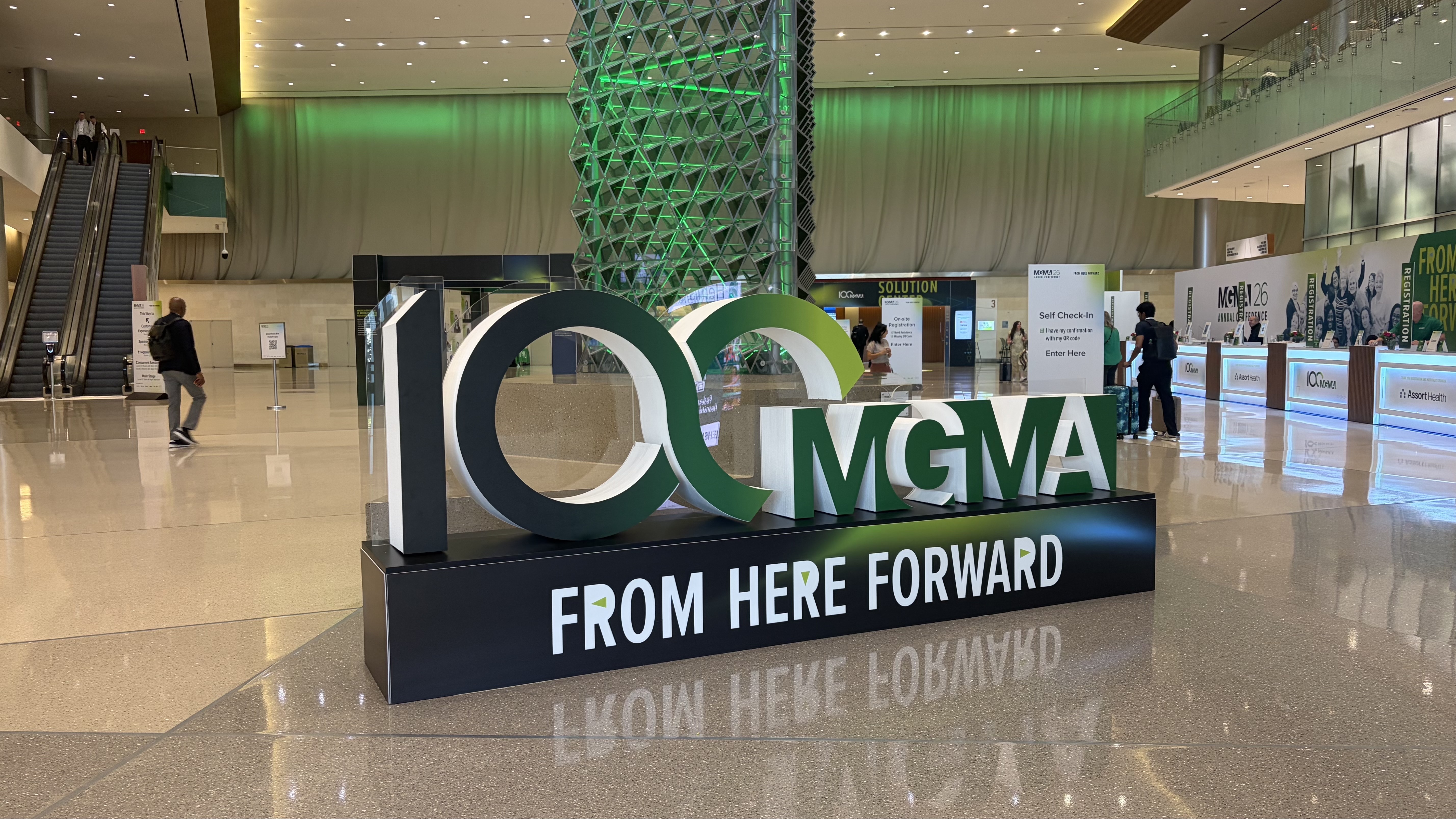
At MGMA’s 100th anniversary conference, one thing was obvious. AI and automation were everywhere, but the substance of the sessions was deeply human: making care easier to access and protecting practice culture.
Conference emcee Sasha Andreev gave the perfect nod to the administrators and leaders keeping it all together, describing attendees as the “chaos coordinators who keep practices running like well-oiled machines.” As acting MGMA CEO Akash Madiah pointed out during his keynote, practice leadership is often invisible: “Your best work happens behind the scenes. Patients may never know why they got in or why the clinic ran smoothly.”
Zocdoc showed up at MGMA to listen, learn, and collaborate. Everywhere we went, conversations kept circling back to the core challenge our team spends every day working to solve: making it simple and seamless for patients to actually get in to see a doctor.
Here’s a look at what caught our eye at MGMA from practice leaders trying to improve patient access, one scheduling slot at a time.
1. Your phone lines might be clogged for the wrong reasons.
One leader from a regional orthopedic group shared an eye-opening revelation from their call logs: 30 to 40% came from patients simply calling to double-check existing appointment details. That represents a massive chunk of staff capacity spent on routine verification while other patients with complex care needs wait on hold. A perfect use case for automation to save your human front desk for the tough stuff.
2. This is the most frustrating question your front desk keeps asking.
A conference speaker pointed to a subtle intake habit that undermines efficiency: asking returning patients, “Is everything still the same?” Patients don’t know what’s on file, so they default to yes, even if their insurance coverage or contact information changed. It’s a great case for confirming verification digitally ahead of time.
3. ‘We need another PSR’ likely indicates a workflow that needs improving.
When the front desk is strained, practices often first think: hire another patient service representative. But as one MGMA session highlighted, the real culprit usually isn’t understaffing, but workflow issues: staff entering the same info twice, providers with tricky scheduling rules, or missing details. Look for the temporary workarounds your team is duct-taping together to see what’s fixable from within.
4. Templates have far more capacity than they show.
In a packed 7 a.m. session on EHR optimization, a practice administrator from a major regional health system asked: “Who here hits 95% template utilization?” Two hands went up. Her team pushed theirs to 90% after auditing whether 60-minute new-patient slots were actually getting booked for that reason. Carving more of them into two 30-minute follow-up visits made a notable difference in patient volume and speed to appointment time.
5. To truly solve no-shows, understand the ‘why.’
With a one-year waitlist for neuropsych appointments, a neurology clinic decided to dig deeper into why cancellations and no-shows were happening. Their appointments started at 8 a.m., but patients with movement disorders like Parkinson’s struggled to get ready that early. Moving start times to 9, 9:30, or 10 immediately made a difference. The lesson: Look closely at what your patients are dealing with at home.
6. Clinical time is perishable inventory.
When a university sleep center faced a 15% no-show rate, analyzing their data revealed that appointments booked 90+ days out were a primary culprit. Sending a fourth automated SMS reminder wasn’t going to fix a long lead time problem. Instead, they launched a rapid-fill waitlist to get more people in faster.
7. When patients can’t figure out where to go, they drop off.
When a health system audited their back care pathways, they found referring doctors and patients were abandoning next steps because they couldn’t navigate fragmented sub-specialty scheduling. Creating a single, pooled clinician decision tree helped people see the right specialist more quickly and increased patient satisfaction.
8. Keep asking questions.
In a session on helping primary care practices thrive in value-based care, a health system leader shared how his team right-sized appointment lengths for Medicare Advantage visits. They introduced a hybrid model for annual wellness visits, completing routine questions via telehealth in advance so in-person time could be reserved for high-impact care. To make those in-person minutes count, clinicians are trained to end every conversation with two simple words: “What else?” It’s an open invitation for patients to share what’s really going on.
9. The most important part of your practice might be a run-down hallway.
With healthcare turnover sitting between 15% and 30% (and spiking as high as 30% for first-year staff) retention is a problem that directly impacts patient access. A former hospital CEO shared how his leadership team turned around a facility where surgery volume had plunged 40% and morale was in shambles. They took a dark, neglected hallway with water-stained ceiling tiles and peeling wall glue — a space that broadcast, “We don’t care about you” — and brightened the walls with fresh paint and photos celebrating staff accomplishments. It became the central hub for team recognition and the turning point for culture.
Improving patient access is not just the job of one staffer, practice, or health system. It takes a village. And meeting hundreds of dedicated and passionate practice administrators at MGMA 2026 showed us just how strong that community is. We at Zocdoc left San Antonio inspired by your inventive solutions and energized about collaborating on what’s ahead.
We hope to see you at more upcoming events.
Learn more here about how we power patient growth everywhere.