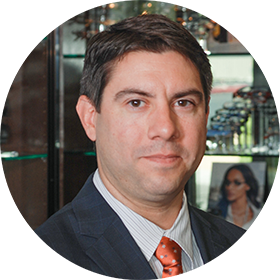
Who are optometrists?
Optometrists conduct vision tests and eye exams, detect eye abnormalities, and prescribe corrective lenses and eye disease medication. They also detect blindness, vision loss abnormalities, and systemic diseases.
According to the American Optometric Association, eye exams protect overall health by allowing optometrists to check more than 270 medical conditions, such as cancer, autoimmune illnesses, and high blood pressure. Following are some more conditions you can see an optometrist near you for:
- Astigmatism: An eye condition where the cornea or lens is misshapen, causing blurred or distorted vision.
- Chalazion: A painless, slow-growing lump or cyst in the eyelid.
- Glaucoma: This group of eye conditions damages your optic nerve and might result in vision loss and potential blindness.
- Amblyopia or lazy eye: A vision disorder where the brain and eye don't work together correctly, resulting in decreased vision in one or both eyes.
- Cataracts: Refers to clouding in the natural lens of the eye, causing blurred vision, sensitivity to light, and other visual problems.
- Dry eye disease: A chronic condition wherein the eyes don't produce enough tears for adequate lubrication, resulting in discomfort, irritation, inflammation, light sensitivity, and other symptoms of the eyes.
- Blepharitis: An inflammation that causes redness, swelling, itching, and irritation in the eyelids and the base of the eyelashes.
- Diabetic retinopathy: A diabetes complication that may damage the retina's blood vessels, causing vision loss or blindness.
- Styes: Small, painful lumps form on the eyelid, typically due to a bacterial infection of an oil gland or hair follicle.
- Eye duct obstruction: A blockage in the tear ducts, which prevents tears from draining and can cause excessive tearing, eye infections, and other complications.
- Keratoconus: An eye disorder that makes the cornea become thin and bulge, resulting in distorted vision and potential blindness.
- Pink eye or conjunctivitis: Inflammation of the transparent membrane over the white part of the eye and inside the eyelids (conjunctiva), causing redness, itching, and discharge, among other symptoms.
- Age-related macular degeneration: This progressive eye disease affects central vision, resulting in vision loss or blindness.
- Strabismus or crossed eyes: A vision concern in which the eyes do not align properly and point in different directions.
- Refractive errors: Eye disorders resulting in blurry vision or other visual problems.
- Ocular allergies: allergic reactions to an irritant that causes itching, redness, swelling, and other eye symptoms.
What are the education, training, and certifications of an optometrist?
An optometrist attends an optometry school for four years. They study pre-med or science and graduate with a bachelor's degree. Then, they pass an optometry admission test. After which, they enroll in a four-year doctor of optometry program. Following that, they take the National Board of Examiners in Optometry exam. Finally, they apply for and obtain an optometry license. Their education consists of both classroom and clinical experience. Some optometrists complete a one-year residency in a specialty such as ocular disease or low vision.
How do optometrists assess eyes during a comprehensive eye exam?
A comprehensive eye exam is a medically accepted standard to ensure healthy vision and detect and treat illnesses with a doctor of optometry. It consists of a series of tests. Following are the ways optometrists assess eyes during a comprehensive eye exam:
- Eye and overall health history: Optometrists will first inquire about any visual issues you may be experiencing and your overall health. Inform them if you have systemic health issues, such as high blood pressure. You must also inform your optometrist about any medications, even if they're not for your eyes.
- Visual acuity test: Optometrists perform this test to determine whether you need vision correction. There are two visual acuity tests—distance, near and intermediate. With the help of an eye chart of increasingly decreasing letter sizes, optometrists perform visual acuity tests in most circumstances. The optometrist will likely use a phoropter to assess your vision during this examination stage.
- Keratometry and topography: Optometrists perform this test to assess the curvature of your cornea. The findings are essential if you're getting fitted for contact lenses.
- Color blindness test: Optometrists perform this test to detect whether or not you have any color blindness.
- Ocular motility testing: This eye exam ensures that you can easily follow a moving item with your eyes.
- Depth perception test: Optometrists use a depth perception test to clarify three-dimensional object vision.
- Peripheral visual field test: This eye examination lets you see what is directly in front of you and to your side.
- Retinoscopy: This test checks whether you need or do not need glasses.
- Tonometry: This test helps detect glaucoma by measuring eye pressure.
- Slit-lamp exam: This involves using a microscope with a light to examine eye parts. It can detect dry eyes, cataracts, macular degeneration, or cornea injuries.
Optometrists vs ophthalmologists, and when should you consult an ophthalmologist?
Optometrists and ophthalmologists address similar eye conditions, but the decision of whom to choose between them depends on various aspects like the severity of the disease, personal comfort, and accessibility. Both can diagnose common vision problems like nearsightedness and farsightedness and treat them by prescribing corrective lenses like contacts or eyeglasses.
At times, both collaborate to ensure comprehensive and effective care for those with diverse eye conditions. For instance, optometrists initiate the treatment and refer patients to ophthalmologists for advanced care, including specialized medications, procedures, or surgeries. Additionally, optometrists identify individuals at high risk for vision loss and promptly refer them to ophthalmologists for early intervention.
However, there are situations where seeking the expertise of a more specialized eye doctor or ophthalmologist near you becomes essential. These doctors provide treatments beyond routine vision correction and are experts in advanced eye care and surgical treatments.
It is advisable to consult an ophthalmologist if you:
- Have complex eye conditions.
- Require technical examination for diagnosing eye problems.
- Eye surgery is required, including procedures like cataract surgery and LASIK.
- Are suffering from an underlying systemic illness like diabetes, hypertension, or autoimmune diseases can also affect the eyes.
- Require attention for certain eye issues specific to children.
- Reconstructive surgery is necessary to address problems with structures around the eye.
- Experience a sudden change in your vision.
Additionally, seek prompt medical attention from an eye doctor near you if there are new and sudden changes in eye symptoms, such as distorted vision, decreased or temporary blurry vision, double vision, excessive tearing, loss of peripheral (side) vision, a halo around the vision, or the appearance of new floaters or flashes of light in your vision.
How often should you visit an eye doctor?
Comprehensive eye exams help prevent and detect eye problems early. Your eye specialist can guide you on ways to maintain overall eye health. This way, you can avoid irreversible eye disease complications such as low vision or blindness. Various factors such as your age, eye health, and risk factors will govern the frequency of eye exams for you. However, general recommendations for low-risk children and adults by the American Optometric Association are as follows:
- 6 and 12 months old: At least one eye exam
- 3-5 years old: At least one eye exam
- 6-17 years old: At least one eye exam every year
- 18-39 years old: At least one eye exam every two years
- 40-64 years old: At least one eye exam every two years
- 65 and older: At least one eye exam every year
It's especially advisable to consult an eye doctor near you regularly if you wear corrective lenses, suspect the need for contact lenses or glasses, have a chronic disease like diabetes (which increases the risk of eye diseases), possess a family history of vision loss or eye disease, or take prescription medications affecting your eyes.
Easy tips to maintain good eyesight
Good eye health is the foundation of overall well-being. Here are some easy ways you can look after them and keep them healthy and sound:
- Eat well: Like any other body part, the eyes also require good nutrition to work optimally. According to experts, omega-3 fatty acids, zinc, lutein, vitamins E and C are vital for the eyes. These keep age-related vision problems at bay. Hence, you should consume green leafy vegetables, oily fish like salmon and tuna, eggs, beans, nuts, and other nonmeat protein sources, and citrus fruits like oranges, oysters, and pork.
- Quit smoking: There is no alternative for this. Quitting smoking is crucial if you want good eye health. Smoking damages your optic nerve and leads to cataracts and macular degeneration. If you are unable to quit smoking for the good, ask a qualified doctor for help.
- Protect your eyes: Wear sunscreen to protect your skin against the harmful sun rays, but what are you doing to protect your eyes? The sun is as harmful to the eyes as to the skin. Excessive UV exposure elevates the chances of macular degeneration and cataracts. Thus, wearing sunglasses that block most of these rays is essential. Also, jobs that include exposure to hazardous or airborne materials and sports like racquetball, ice hockey, and lacrosse can cause eye damage. Wearing safety glasses or sports goggles can shield your eyes.
- Limit your screen time: Excessive screen time causes eyestrain, blurry vision, trouble focusing, dry eyes, headaches, and neck, back, and shoulder pain. But how can you deal with it, especially for people whose jobs require more screen time? Taking short breaks in between, using anti-glare screens, blinking more, or using artificial tears, and practicing eye exercises can help.
It is always wise to consult an eye specialist like an ophthalmologist or an optometrist, for personalized advice.
How can you find the best optometrist near you in Las Vegas, NV?
Are you looking for eye care treatment in Las Vegas? Is blurry vision bothering you? You don't have to worry because Zocdoc can help you find the best optometrists nearby.
On Zocdoc, you must create an account and enter the condition, location, and insurance plan. A list of optometrists based on your search criteria will appear. Each optometrist on Zocdoc has a profile that includes a brief introduction, practice location, board certifications, education, visit reasons, and availability time.
While adding your insurance information to your Zocdoc account makes finding in-network providers easier, many offices will still ask you to bring your insurance card to the appointment. For any insurance-related query, visit Zocdoc's patient help center.
Most importantly, you will find recent, verified patient reviews. You can always look at patient reviews to find the best optometrist near you for treatment. Zocdoc also offers video visits. All the appointments on Zocdoc are safe, secure, and 100% free.
Vital statistics on eye conditions and optometrists in Las Vegas, NV
According to the U.S. Bureau of Labor Statistics May 2021 State Occupational Employment and Wage Estimates, Nevada had around 390 optometrists. More than 87,000 persons reported blindness or significant difficulties seeing even with glasses, according to the Centers for Disease Control and Prevention's The Impact of Vision Impairment study for Nevada as of August 2021. 14% diabetes, 35% arthritis, and 43% mobility difficulties have seen persons with severe vision impairment in Nevada. Severe vision impairment affects 45% of people aged 65 and up. According to the same study, vision impairment affected 2.9-3.5% of people in Las Vegas.
According to the Blindness Statistics by the National Federation of the Blind, in 2016, 101500 Nevada people reported visual disability. According to Vision Problems in Nevada data by Prevent Blindness America, in 2012, there were 7,746 reports of blindness and 19,444 vision impairment in people under 40. Myopia was present in 284,753 people, and hyperopia in 114,990 people under 40. 190,116 Nevada people under 40 had cataracts, 20,459 had glaucoma, and 65,871 had diabetic retinopathy.
According to the Vision and Eye Health Surveillance System (VEHSS) by the Centers for Disease Control and Prevention, in 2017, the prevalence of vision loss in Nevada people aged:
- 18-24 years was 1.54%
- 25-29 years was 1.49%
- 30-34 years was 1.42 %
- 50-54 years was 1.37%
- 60-64 years was 2.76%
- 70-74 years was 7.67%
- 85 and older was 22.70%.
In 2017, the prevalence of blindness in Nevada people aged 85 years and older was 6.32%.
According to a 2019 American Foundation for the Blind report, nearly 68,615 people in Nevada had vision problems, with 32,792 men and 35,823 women. About 863 children under the age of 5 and 5,213 between the ages of 5 and 17 reported having vision problems. Around 8,130 between 18 and 34 years old also had vision problems. In 2019, 19,045 people aged 75 and up experienced vision problems.
Sources
WebMD[1]
WebMD[2]
Healthline
American Association for Pediatric Ophthalmology & Strabismus
American Optometric Association
VeryWellHealth[1]
VeryWellHealth[2]
U.S.Bureau of Labor Statistics
Centers for Disease Control and Prevention[1]
Centers for Disease Control and Prevention[2]
Centers for Disease Control and Prevention[3]
American Foundation for the Blind
Mayo Clinic[1]
Mayo Clinic[2]
Mayo Clinic[3]
Mayo Clinic[4]
Mayo Clinic[5]
Mayo Clinic[6]
Mayo Clinic[7]
Mayo Clinic[8]
Mayo Clinic[9]
Mayo Clinic[10]
Mayo Clinic[11]
Cleveland Clinic
GoodRx Health