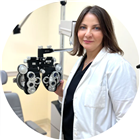
Who is an optometrist?
The optometrist is a primary eye care professional with training and licensure to diagnose and treat various eye problems. They perform comprehensive eye exams to detect vision problems and eye diseases, and they can prescribe glasses, contact lenses, and medications to manage certain eye conditions.
Optometrists are healthcare professionals who have earned a Doctor of Optometry (O.D.) degree from an accredited optometry school, and state boards license them to practice optometry. They may work closely with other healthcare providers, such as ophthalmologists to manage patients' overall health and wellness.
What can an optometrist do?
An optometrist assesses your eye health and visual quality during a comprehensive checkup. Numerous eye diseases can be diagnosed and treated without surgery or additional specialist care. Optometry practice includes the following:
The following conditions can be diagnosed and treated by your optometrist:
- A chalazion, which is a hump on the edge of the eye.
- Dry eye disease caused by inflammation of the cornea (the protective outer eye layer) or the conjunctiva (tissue lining).
- Glaucoma, which causes high ocular pressure.
- Ocular allergies that affect the eyes.
- Strabismus - misalignment of the eyes.
What can ophthalmologists do?
Ophthalmologists treat several eye conditions, from minor annoyances to more serious ones that result in partial or total blindness.
Some of these ophthalmologists choose to specialize in areas such as:
- Pediatric ophthalmologists diagnose and treat eye disorders and problems in children.
- Neuro-ophthalmology refers to vision disorders involving the brain, nerves, and muscles.
- Oculoplastic surgery is a type of surgery that includes plastic surgeries for eyelid tumors, eyelid repair, and other cosmetic eye surgeries.
- Vitreoretinal surgery is used to diagnose and treat diseases of the retina and uvea.
Differences between optometrists and ophthalmologists
Optometrists and ophthalmologists diagnose and treat eye disorders. While they share some similarities in their field, there are essential differences between the two professions.
Ophthalmologists also specialize in eye care and surgery. They are trained to diagnose and treat various eye conditions, from simple vision problems to complex diseases like glaucoma and macular degeneration, and conduct surgical procedures such as cataract surgery or LASIK. They have completed four years of medical school, an internship for a year, and a three-year residency in ophthalmology. They are the only eye specialists who can perform surgery. Patients with severe or complex eye conditions may need to see an ophthalmologist for treatment. However, patients with routine vision care needs can see an optometrist for their eye care.
Who is an optician?
An optician, also known as a dispensing optician, is a trained professional who can fit you with eyeglasses or contact lenses to help with your vision. They cannot write prescriptions, but they can follow the instructions in those written by eye specialists. Opticians spend roughly half of their time in optometry and medical offices. They might also be available in places that sell eyeglasses and contact lenses.
What can opticians do?
Listed below are some key responsibilities of an optician:
- Interpreting prescriptions written by optometrists or ophthalmologists.
- Helping customers choose eyeglass frames and lenses that fit their needs, style, and budget.
- Measuring customer's face and eyes to ensure the proper fit of eyeglasses.
- Fitting and adjusting eyeglasses to the customer's face.
- Instructing customers on proper care and use of eyeglasses and contact lenses.
- Verifying and interpreting orders with optical laboratories to ensure accuracy.
- Maintaining accurate and organized records of customer orders and inventory.
- Performing basic repairs or adjustments to eyeglasses.
- Keeping up-to-date with the latest eyewear products and trends.
- Operating and maintaining equipment such as lensometers, frame warmers, and ultrasonic cleaners.
What eye tests can you expect when visiting an optometrist?
An optometrist will ask for your medical history and any vision problems you may be experiencing. They will then examine your vision to ensure optimal eye functioning. Some of the tests conducted by optometrists include:
- Cover test: This test helps determine if your eyes are working well together. While the optometrist covers and uncovers each eye to see how your eyes move, you will focus on a small target a set distance away.
- Eye muscle movement test: This test measures your eye alignment when you follow a moving object or target, such as a fingertip or a pen, in different directions.
- Pupil reactions: The pupils of your eye are constantly adjusting to changing light levels. Your optometrist will examine the white region of your eyes, the position of your eyelids, and how your pupils adjust.
- Visual acuity/refraction test: This requires closing one eye and reading various sections of an eye chart, from the largest letters at the top to the lowest row at the bottom. This helps determine if you require corrective lenses. If you do, you will undergo a refraction test, enabling your optometrist to fine-tune your prescription by switching between lenses.
How frequently should you have your eyes checked?
Having your eyes and eyesight examined regularly by an optometrist near you can assist them or other eye care providers to identify concerns early on. Your age usually determines the frequency with which you should have your eyes tested:
- Kids: An eye care specialist should examine your child's eyes during the first year of their birth and then at least once every one to two years after that.
- Adults aged 18 to 55: An eye test is recommended every one to two years
- Adults over the age of 55: These individuals should get their eyes tested every year.
If you use glasses or contacts or need any sort of visual aid, you may need to get your eyes tested more frequently than this. Consult your optometrist or provider to see if you require regular eye exams.
Ways to alleviate digital eye strain
Computer vision syndrome (CVS) or digital eye strain is a set of vision or eye problems that may occur as a result of working long hours on digital devices. CVS can affect people of all ages and cause headaches, blurry vision, and eyes aching, tearing, becoming tired, or burning. These symptoms may be caused by many factors, including poor lighting, poor sitting posture, glare on a digital screen, or a combination of all these problems. Additionally, reading or working on a digital screen is different from reading a printed page. The eye focusing and eye movements required to use a digital screen place high demands on the visual system, which ultimately leads to eye fatigue and strain.
If you experience constant eye strain, you can consult an eye doctor or optometrist who can find out the underlying cause of your eye problem. However, there are ways you can relieve digital eye strain by incorporating a few simple tips into your work/study routine. Some common methods of relieving digital eye strain include-
- Follow the 20-20-20 rule: Another effective way to alleviate digital eye strain is to view an object or image 20 feet away for a minimum of 20 seconds, at least every 20 minutes. It takes nearly 20 seconds for the eyes to relax completely.
- Use lubricating eye drops or artificial tears: Lubricating eye drops can help dry eyes by adding back some of the same elements that tears have. These elements protect the surface of the eyes. Artificial tears or eye drops can be purchased over the counter and used as often as one needs them or as prescribed by an eye doctor.
- Adjust your device's brightness, font size, and contrast:Your eyes may have to work harder to read or see things on the screen when your phone or computer screen glows brighter than your natural surroundings. This often leads to eye fatigue and strain. You may use a matte screen filter to reduce the glare. Increasing the font size to view text on your screen can prevent squinting, thereby reducing your eye strain.
- Blink often: Blinking helps to keep the surface of the eyes moisturized and prevents dry eyes. Studies show that people blink only 5-7 times in a minute while viewing a digital screen as opposed to how we normally blink, which is 15 times in a minute. Make a conscious effort to blink while watching a screen.
- Adjust your seating position and your device's position: Ensure you sit 20-26 inches or approximately an arm's length away from the screen you're working on so that your screen is just below eye level.
Find a qualified optometrist near you in Garden City, New York
Are you looking for an optometrist in Garden City, New York? Zocdoc is the perfect tool to help you find and book the right eye doctor. With Zocdoc, you can easily browse a list of highly-rated optometrists in Garden City and book an appointment with just a few clicks.
With detailed profiles of each optometrist, you can easily find the right optometrist who meets your needs. You will have access to verified patient reviews and ratings to see what others say about their experiences with each optometrist.
To book an appointment with an in-network optometrist, you can manually select your health plan on the Zocdoc website. If that does not help you find your particular plan, you can upload a photo of your insurance card and let Zocdoc scan the image of your card to show you your likely plan. Note that this service is available only for medical insurance cards. Dental or vision insurance cards are excluded. If you need assistance uploading your medical insurance card, contact Zocdoc's service team. You may also access Zocdoc's patient help center for more insurance-related information.
Using Zocdoc, you can also view the availability of each optometrist near you in real-time and book an appointment that fits your schedule. No more waiting on hold or dealing with the hassle of traditional appointment scheduling.
You can book appointments and conveniently manage your healthcare in one place quickly and conveniently. Finding an optometrist in Garden City doesn't have to be complicated. Make the process quick, easy, and stress-free by using Zocdoc. Schedule an appointment today to take the first step towards a clear and healthy vision.
All bookings on Zocdoc are simple, secure, and 100% free.
Statistics on optometrists in Garden City, New York and the U.S.
The Centers for Disease Control and Prevention (CDC) reports that vision impairment affects many people in the United States. According to the CDC, over 12 million Americans over 40 have some form of vision impairment. This includes cataracts, age-related macular degeneration, diabetic retinopathy, and glaucoma. According to the department, the most common causes of vision impairment in New York State are cataracts, age-related macular degeneration, and diabetic retinopathy.
According to the Centers for Disease Control and Prevention, nearly 6.8% of children under 18 in the United States have an eye or vision ailment. Almost 3% of children under 18 are partially or wholly visually impaired, having difficulty seeing even when wearing glasses or contact lenses.
According to the New York State Optometric Association, approximately 2,800 licensed optometrists were practicing in New York as of 2022. The Department of Health website for the state of New York provides information on healthcare professionals, including optometrists. As of 2022, the site reports around 36,941 licensed healthcare professionals in Garden City, New York.
As per the U.S. Bureau of Labor Statistics, employment opportunities for optometrists are expected to increase by around 9% between 2023 and 2033, significantly outpacing the average growth rate for all professions. On average, around 2,200 new positions for optometrists are anticipated each year over the next decade.
Sources
Healthline
Medical News Today
Cleveland Clinic
U.S. Bureau of Labor Statistics
New York State Optometric Association
Centers for Disease Control and Prevention
WebMD
American Optometric Association
American Academy of Ophthalmology[1]
American Academy of Ophthalmology[2]