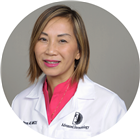
Who is a dermatologist?
Dermatologists diagnose and treat skin, hair, nails, and mucus membrane diseases. The skin, being the heaviest and largest organ, serves many functions. It shields you from heat, cold, germs, and potentially harmful substances. It also serves as your first defense against infections and sickness, protects other organs, and warms and cools you. It's also an excellent indicator of your overall health; a change in the color or feel of your skin could potentially mean a health problem.
Dermatologists have thorough training that enables them to diagnose and treat over 3,000 skin, nail, and hair diseases and cosmetic concerns. Skin conditions can have severe consequences for your health and well-being. A skin condition may be the first sign of a serious underlying health problem; your dermatologist can be the first to notice it. Diabetes and heart disease, for example, can have skin manifestations.
Your dermatologist understands that even if a skin condition is not fatal, it may impact a person's quality of life. It can lead to sleep loss, poor self-image, major depression, and decreased productivity. Such skin conditions include Eczema (atopic dermatitis), scarring, hair loss, and psoriasis. People of all ages can develop skin, hair, and nail conditions; dermatologists can treat persons of all ages, from newborns to older people.
Education of dermatologists
It takes many years of education to gain expertise in dermatology. Before practicing, dermatologists must finish more than ten years of training. This includes four years of college to get a bachelor's degree, four years in medical school to become a doctor, a one-year medical internship, and then three years of residency, during which they work with experienced doctors and have to spend 12,000 to 16,000 hours in patient care. Some dermatologists will then pursue advanced or fellowship training in a specific area.
Dermatologists can also gain board certifications. The American Academy of Dermatology, the Dermatology Board of the American Osteopathic Association, and the Canadian Royal College of Physicians and Surgeons are the three organizations that bestow it. When you see the letters FAAD (Fellow of the American Academy of Dermatology) at the end of a dermatologist's name, you know they are board-certified.
What are the different specialties in dermatology?
Some specialties of dermatology include:
- Dermatopathologist: A dermatologist who practices pathology (the study and diagnosis of diseases) is a dermatopathologist. Knowledge of both fields enables them to diagnose diseases using a microscope to examine a piece of removed skin, hair, or nail. When your dermatologist notices a problem with your skin, they may remove a small piece of skin and send it to a dermatopathologist for testing to confirm the suspected diagnosis. The dermatopathologist provides your dermatologist with a written pathology report.
- Mohs surgeon: Mohs (pronounced Moes) surgery is a type of skin cancer treatment. It has many advantages, but it is not appropriate for everyone with skin cancer. A dermatologist considers several factors before deciding on the best treatment for each patient. These include the type of skin cancer, whether the cancer has spread, and the location of the skin cancer on the body.
- Pediatric dermatologist: Some skin, hair, and nail diseases are more common in children, and some diseases only occur in children. A pediatric dermatologist specializes in treating skin, hair, or nail problems in children (from newborns to adolescents). While all dermatologists treat children with skin conditions, if your child has a severe disease, a problematic birthmark, or a rare condition, the doctor may refer you to a pediatric dermatologist.
- Cosmetic dermatology: Cosmetic dermatologists specialize in non-surgical procedures that help improve the skin's texture and appearance. They perform procedures like laser therapy, Botox, chemical peels, body contouring, and microneedling. Additionally, they can treat skin conditions like acne, Eczema, and psoriasis. While cosmetic dermatologists pursue additional training, they do not require a separate certification.
What is the difference between an esthetician and a dermatologist?
Although both estheticians and dermatologists focus on skincare, they differ in education, expertise, and the services they provide. Dermatologists are medical professionals who conduct surgeries, prescribe drugs, and diagnose and treat skin disorders. They also offer advanced cosmetic treatments such as laser hair removal, Botox, and dermal fillers.
Estheticians, conversely, focus on enhancing the skin’s appearance through non-medical treatments like facials, mild chemical peels, microdermabrasion, waxing, threading, body wraps, and scrubs.
Dermatologists typically work in specialized clinics or hospitals, while estheticians work in salons, spas, or retail settings. To become an esthetician, one must have a high school diploma or GED, complete cosmetology school with 250 to 1,000 hours of training (depending on state regulations), and pass a state-approved licensing exam. Estheticians can also obtain advanced certifications from the National Coalition of Estheticians Associations (NCEA) for specialized techniques such as laser treatments and facial procedures.
What is melanoma?
Melanoma refers to a kind of skin cancer wherein the pigment-producing cells in the skin undergo uncontrolled growth. It is often referred to as the most severe or aggressive form of skin cancer, as it can quickly spread to different body parts, such as internal organs and lymph nodes, and can prove fatal. Melanoma can either develop in an existing mole or appear suddenly on the skin without any signs or symptoms. Per the American Academy of Dermatology, melanoma incidence rates have almost doubled between 1988 and 2019, and it is a significant disease burden in the USA.
However, melanoma is a highly treatable form of cancer when detected early. Dermatologists recommend regular mole checks and mapping, or doing routine skin self-exams at home is the best way to see the early signs of melanoma.
ABCDE of Melanoma
ABCDEs are the five early warning signs of melanoma that appear on the skin. Knowing these signs can help with early diagnosis, effective treatment, and holistic recovery from the disease.
- A for Asymmetry: A normal mole is symmetrical with equal halves. Suppose a mole has an irregular shape or its two halves look distinctly different. In that case, it could be a sign of melanoma.
- B for Border: A normal mole has a well-defined border with sharp edges. A mole with a poorly defined, scalloped, or irregular border could signify melanoma.
- C for Colour: A normal mole will be uniformly black or brown. If a mole has many colors, different shades, or an uneven distribution of color, it's a sign of melanoma.
- D for Diameter: If you find a new mole growth or an existing mole that is 6 millimeters or more in diameter or more than the size of a pencil eraser, it could be a sign of melanoma
- E for Evolving: If a particular mole has changed its size or shape since your last examination or is growing and exhibits symptoms of bleeding and itching, it could be a sign of melanoma.
How do you do a skin self-exam for skin cancer?
According to the ABCDE parameters, here are some ways to do an effective home skin self-exam to detect skin cancer and cancerous moles.
Stand in front of a full-length mirror and examine the back, front, right, and left parts of your body in the mirror. Look for any new or abnormal moles.
- Check your palms, forearms, and underarms
Check your underarms and other areas hidden from standard view carefully. Bend your elbows and look at your forearms and palms.
- Check your legs, toes, between toes, and feet
Check the backs of your feet and legs, the soles of your feet, and the spaces between your toes.
- Check your back and buttocks
Use the handheld mirror to check your buttocks and lower back area thoroughly.
According to board-certified dermatologists, you must perform these checks regularly to effectively identify a potentially cancerous mole and seek immediate specialist assistance, diagnosis, and treatment.
What are the standard procedures that dermatologists perform?
Some standard procedures that dermatologists perform include:
- Electrosurgery: It includes using a high-frequency electric current to destroy or cut tissue.
- Cryosurgery: It involves using frigid temperatures to freeze and destroy tissue.
- Laser surgery: It involves the surgical benefit of special light beams.
- Excision surgery: The doctor uses a sharp knife (scalpel) to excise (remove by cutting) tissue.
- Mohs surgery: This technique removes cancer cells from your skin layer by layer.
- Mole removal: It can include the partial or total removal of moles from your body.
- Vein treatment: Dermatologists can treat damaged veins with sclerotherapy or laser treatments.
- Biopsy: During biopsies, doctors remove tissue samples and send them to a pathologist, who checks for signs of disease. Different types of biopsies include scrape, needle biopsy, punch biopsy, and endoscopic biopsy. Dermatologists select the exact procedure based on the body part they need a sample of.
- Skin graft: This is a surgical procedure in which doctors take healthy skin from a part of your body and transplant it to replace damaged skin.
- Microdermabrasion: This cosmetic procedure deploys a rotating brush on a handheld device. It removes the top layer of the skin, making it appear even. Doctors recommend this procedure to reduce scar tissue, fine lines, wrinkles, and tattoos.
- Chemical peels: This process is also known as derma-peeling or chemexfoliation. Doctors apply a chemical solution to your skin. The solution typically contains glycolic, salicylic, and lactic acid. The chemical reaction causes a layer of skin to peel off, revealing smooth, regenerated skin underneath. Doctors often use chemical peels to treat sun damage and acne.
Which foods promote healthy skin, hair, and nails?
Maintaining a balanced diet can improve the health of your skin, hair, and nails. Hydrating foods like cucumbers, watermelon, and celery help keep skin moisturized. Fatty fish (salmon & mackerel) provide omega-3 fatty acids, which reduce inflammation and support skin hydration, along with vitamin E, biotin, and protein for keratin production. Nuts and seeds, (almonds, walnuts, and sunflower seeds, etc), are good sources of vitamin E, which protects the skin from oxidative damage and UV-related aging.
Avocados have healthy fats and vitamins E, A, and C to enhance skin elasticity, hydration, and collagen production. Sweet potatoes, packed with beta-carotene that converts to vitamin A, contribute to healthy skin and nails. Dark leafy greens (spinach, kale, and Swiss chard) provide essential nutrients that support overall skin, hair, and nail health. Eggs, a high-protein food, helps strengthen hair primarily composed of keratin. Lastly, oysters, loaded with zinc, promote hair growth and tissue repair.
For personalized recommendations, consult a healthcare professional.
When can you visit a dermatologist near you?
If you are facing any of the below-mentioned concerns, you can visit a dermatologist:
- If you suffer from severe acne that covers a large portion of your body or face, you should consult a dermatologist. Local drugstore products may not be ideal for severe acne. A dermatologist can offer stronger topical and oral drugs that require a prescription and more extensive therapies like chemical peels and laser procedures. Starting treatment as soon as possible is vital because even minor acne can leave permanent scars.
- The symptoms of eczema include redness, swelling, and itching of the skin. Per the National Eczema Association, over 30 million Americans have Eczema, which can cause a wide range of skin issues. Additionally, persistent redness or flushing of the face may be a sign of rosacea. If you have redness, burning, dry skin, or bumps resembling pimples, visit a dermatologist.
- Reddish, raised patches of dry or flaky skin could indicate psoriasis. Itchy and sometimes painful, these spots can develop on your chest, elbows, scalp, knees, and lower back. Schedule a dermatologist's appointment immediately to receive treatment.
- Although skin tags and moles can be unsightly, they usually don't need to be treated by a doctor. If you notice any changes in the dimensions, form, color, or texture of moles or other skin growths, you should see a dermatologist. Some skin growths and moles may turn into skin cancer.
- Since some cancers, like melanoma, can be fatal, early detection of skin cancer is essential. Check for unusual skin growths, asymmetrical moles, or lesions larger than a pencil eraser.
- Yeast, bacteria, viruses, and fungus can quickly grow on your delicate skin and nails. Warts, pus, and discolored skin all indicate an illness that needs medical attention.
- Daily hair loss can be normal, but bald spots or thinning hair could indicate something more severe. Your dermatologist will identify the cause of your hair loss and suggest therapies to encourage growth or lessen the visible signs of hair loss.
- Varicose veins, or bulging veins, are generally benign, as are spider veins, which appear on your legs or other regions of your body. These veins can sometimes be painful and indicate a significant circulation issue.
- Wrinkles, age spots, and other aging-related discolorations can make one look older. A dermatologist can offer treatments to smoothen wrinkles, tighten loose skin, and improve one's appearance. Treatments include dermal fillers and Botox, chemical skin exfoliants, skin resurfacing with lasers, and LED therapy.
How do you prepare for an appointment with a dermatologist near you?
If you are going for a general dermatology consultation, do these beforehand:
- Note which body part is affected and what your symptoms are. If your symptoms fluctuate over time (like acne or pigmentation), take a picture of your skin when they are most visible.
- Collect information about the supplements and medications you are taking. This way, your doctor can assess if your skin reacts adversely to them.
- Carry the results if your primary doctor had prescribed a biopsy or other lab tests.
- Make sure your face is clean on the day of your appointment. Avoid wearing makeup, and remove your nail paint if the doctor is going to check your nails.
Find the best dermatologist in Fairfax, Virginia
Finding a well-qualified dermatologist is quick and simple with Zocdoc. You can create an account on the Zocdoc website or download the mobile app. To find the top-rated dermatologists in Fairfax, Virginia, mention your specialty (dermatologists), location, preferred appointment date, and insurance details. The website will then direct you to a list of the top-rated dermatologists in your vicinity. You may also filter your search by gender, hospital affiliations, languages spoken, and whether or not a doctor treats children. If you need clarification on your insurance plan, you can use Zocdoc's insurance selector.
All practitioners listed on Zocdoc have a dedicated profile where you can read more about their education, training, experience, expertise, practice name and location, board certifications, and other awards and recognitions, among other information. You can also read the verified patient reviews before choosing the best dermatologist near you. With Zocdoc, you can also book appointments on weekends and after 5 pm, depending on the practitioner's availability.
Suppose you want to know your insurance plan. In that case, you can simply upload an image of your insurance card to your Zocdoc account, and we will find and display information regarding your insurance plan. Also, you can contact the Zocdoc service team if you need help uploading a photo of your card. Don't forget to check out Zocdoc's patient help center for more information and solutions related to insurance.
Booking in-person or online appointments on Zocdoc is fast, free, and secure.
Dermatology-related conditions in the U.S. and Virginia
Per the U.S. Bureau of Labor Statistics, as of May 2021, there were 9230 dermatologists practicing in the country. The most common skin problem in the USA is acne. It affects about 50 million of its people annually. Roughly 85% of people between 12 and 24 experience at least minor acne. Atopic dermatitis is estimated to affect about one in ten people during their lifetime. About 60% of people get this within the first year of life, and about 90% develop it before age five. Hair loss affects about 80 million Americans — 50 million men and the rest 30 million women. Psoriasis impacts approximately 7.5 million people in the U.S. Its occurrence is seen in all age groups but primarily in adults, with the highest proportion between ages 45 and 64.
Skin cancer happens to be the most common cancer in the U.S., with over 9,500 persons being diagnosed with skin cancer every day. Between 2017 and 2021, the incidence of melanoma of the skin in Virginia was 21.1. This was slightly lower than the national rate of 22.7. The age-adjusted incidence of the condition in Fairfax County was 10.7. The age-adjusted incidence of last-stage melanoma of the skin in Virginia was 3.1.
Sources
Cleveland Clinic[1]
American Academy of Dermatology[1]
American Academy of Dermatology[2]
U.S. Bureau of Labor Statistics
State Cancer Profiles
Cleveland Clinic[2]
Cleveland Clinic[3]
MedicalNewsToday[1]
MedicalNewsToday[2]
MedicalNewsToday[3]
MedicalNewsToday[4]
Zocdoc
American Academy of Dermatology[3]
American Academy of Dermatology[4]
American Academy of Dermatology[5]
Healthline[1]
Healthline[2]