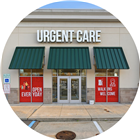
What Are Urgent Care Centers?
Urgent care centers provide timely and cost-effective care for non-emergency conditions — serving as a link between primary care physicians and the emergency department. Their rise can be attributed to the 73 percent of Americans who say they cannot see their family doctor after business hours or on the weekends. Urgent care centers provide same-day care for conditions requiring urgent care, i.e., the conditions that may deteriorate if not treated within 12-24 hours.
In contrast, urgent care clinics do not handle medical emergencies. If a patient's life is in danger or they are at risk of significant harm, a visit to the local emergency room (ER) is advised. Unlike freestanding or hospital emergency rooms, however, these clinics offer round-the-clock care. Many clinics remain open on the weekends and public holidays. Moreover, a visit to the urgent care center may come at a fraction of the expense of a regular ER visit.
According to the Urgent Care Association, the number of urgent care centers surged from 6,400 in 2014 to 8,100 in 2018. Based on revenue, the urgent care centers sector will have a market size of $38.5 billion in 2021. The most common reasons clients attend urgent care centers are strains, sprains, mild fractures, scrapes and burns, and upper respiratory tract infections. Because of shorter wait times, reduced out-of-pocket costs, and faster consultations, these clinics far outnumber ERs. An emergency hospital visit for a sore throat would cost around $525, whereas an urgent care facility visit would cost $94. Similarly, a trip to the ER for a pink eye would cost $370, whereas a visit to the urgent care center would cost $102.
What Is the Difference Between Emergency Room, a Retail Health Clinic, and an Urgent Care Center?
Associated with the Department of Health Care Policy at Harvard Medical School, Dr. Ateev Mehrotra understands how confusing the distinction between urgent care centers, ERs, and retail health clinics might be. He explains further that three main features differentiate between these care options:
- The location of the facility
- Emergency rooms may be freestanding facilities or located within a hospital setting. In contrast, urgent care centers are typically standalone facilities; you may find them at office buildings or as drive-throughs. In comparison, retail health clinics can be found at drugstores, supermarkets like Walmart or Walgreens, stores that occupy larger spaces, and other large retail chains.
- The type of practitioner you will see
- Emergency departments employ emergency medicine specialists, board-certified primary care physicians, pediatricians, OB-GYNs, sports medicine specialists, registered nurse practitioners, and radiologists. In comparison, at an urgent care center, you may find physician assistants, primary care doctors, laboratory technicians, sports medicine specialists, and nurse practitioners. Retail health clinics, however, have a combination of nurse practitioners and physician assistants on the staff. It is also reported that a retail clinic could be 30-40% less expensive than an urgent care clinic.
- The range of treatment available
- ERs are adequately equipped to handle life-threatening and fatal medical emergencies. These facilities have the necessary medical equipment (such as MRI and CT scanners) and personnel to provide emergency care to patients. Urgent care centers too offer basic diagnostic services, including X-ray tests, pregnancy tests, and bloodwork. Retail clinics, however, may not offer any testing facilities.
Look for Top-Rated Urgent Care Centers and Specialists Near You
Family doctor's offices remain shut on evenings, weekends, and public holidays. If you cannot access your primary care physician, urgent care centers may be your best choice. They provide patients with flexibility and ease of use, at the same time lowering the burden on emergency departments. However, selecting an urgent care center can be time-consuming and stressful.
At Zocdoc, our mission has always been to improve patient satisfaction and wellbeing. You can search for "urgent care near me" and Zocdoc will display the top-rated providers in and around Pittsburgh. In no time you will see the list of the best urgent care physicians, sorted by their specialty and availability.
In case you are worried about finances, Zocdoc can help. Simply enter your insurance carrier's name, and we will find the best in-network providers to help you cut down on costs. You can also enter a specific location within Pittsburgh, PA, for more targeted results. All Zocdoc providers have a unique profile. Here, you can learn more about the provider's background, such as their clinical training, board certifications, and specialty. It has never been easier to schedule appointments with experts, practitioners, and clinics.
All bookings are simple, secure, and completely free!
Prominent Urgent Care Organizations in the United States
- American Board of Urgent Care Medicine
- The American Board of Urgent Care Medicine (ABUCM) is a non-profit organization that certifies urgent care physicians. It is dedicated to certifying physicians who specialize in urgent care medicine. The board also acknowledges achievement in urgent care medicine and recognizes providers that meet this criterion.
- The advisory guidelines released by ABUCM aim at improving patient care and establishing standards of clinical competence in the field. The board is also involved in promoting the continuing education of professionals.
- National Urgent Care Center Accreditation
- Accreditation allows an urgent care center to evaluate its services and performance against nationally recognized benchmarks. Although accreditation is voluntary, it signifies a clinic's commitment to providing high-quality care. The National Urgent Care Center Accreditation (NUCAA) issues certificates of accreditation, which help in establishing quality standards for people in the healthcare industry.
- Urgent Care Association
- With more than 3,700 member centers in the United States and overseas, the Urgent Care Association (UCA) may be the largest trade and professional association in urgent care. The members form a group of business experts, clinical practitioners, and suppliers of on-demand, consumer-centric healthcare. UCA's mission includes advocacy, education, research, collaboration, and high-quality standards for improving standards in urgent care and promoting success. A few strategic affiliates of the UCA are:
- The Urgent Care Association Political Action Committee
- The Urgent Care Association Political Action Committee (UCAPAC) is a national-level organization committed to electing politicians who advance the aims and interest of the urgent care industry. The PAC also aids UCA legislative efforts, such as direct advocacy at the provincial and municipal levels, lobbying administration at the federal and state levels, and critical contact networks.
- The Journal of Urgent Care Medicine
- The Urgent Care Association's official journal is the Journal of Urgent Care Medicine (JUCM). JUCM is a nationwide network of approximately 42,000 trained doctors, along with business and administrative professionals operating in urgent care clinics. Each journal issue includes a variety of peer-reviewed clinical and practice management papers that address the unique clinical and practice management demands of today's busy urgent care clinics.
- The College of Urgent Care Medicine
- The CUCM, College of Urgent Care Medicine, is an organization that aims to build on the groundbreaking work done in medicine by UCA physicians. The foundation works to:
- - Improve physician post-graduate fellowship education in urgent care medicine
- - Provide continuous education through conferences, online learning, printed materials, journals, and other long-term resources.
- - Assist in determining the best role for urgent care medicine in the nation's numerous, complex healthcare systems.
- American Academy of Urgent Care Medicine
- The American Academy of Urgent Care Medicine (AAUCM) represents urgent care medicine physicians, physician assistants, and nurse practitioners. AAUCM's self-declared mission includes the promotion of overall quality of medical care, scientific and medical research, as well as medical education in the field of urgent care medicine. AAUCM also seeks to raise acute care standards through teaching, basic and advanced training, and encouraging physicians to pursue board certification in the field.
- Joint Commission
- The Joint Commission's objective is to continuously improve health care for the public by reviewing health care organizations and encouraging them to excel in providing safe and effective treatment of the highest quality and value in conjunction with other stakeholders. Its purpose is to ensure that everyone receives the safest, highest-quality, and most cost-effective health care possible.
Sources