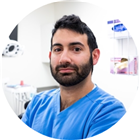
Who is a dentist?
Dentists are healthcare experts who specialize in diagnosing and treating oral diseases. This means they take care of any issues related to:
- Teeth
- Gums
- Muscles of the head, neck, and jaw
- Salivary glands
- Tongue
- Nervous system of the neck and head
They can create treatment plans to restore and maintain oral health and safely administer anesthetics. Dentists can monitor the development and growth of the teeth and jaws and manage oral trauma and other emergencies. They can interpret X-rays and diagnostic tests and perform surgery on the oral cavity’s teeth, bone, and soft tissues.
What do dentists do?
Dentists perform screening tests for oral cancer, diagnostic tests for infectious or chronic diseases and salivary gland function, and biopsies. They can often detect early warning signs in other body parts because the symptoms are often first visible in the mouth. For example, they can refer patients to the appropriate specialist if they detect symptoms of diabetes or cardiovascular diseases. Moreover, dentists can also refer patients to oral health specialists such as endodontists or prosthodontists if they feel the patient can benefit from specialized treatment.
Dentists generally manage a team consisting of dental assistants, dental hygienists, and lab technicians. They can have private practices or work in clinics and hospitals.
Different types of dentists near you
There are various dental professionals who specialize in different aspects of oral health care. Here are the main types:
- Endodontist - Endodontists focus on diagnosing and treating issues related to the dental pulp (the tooth's inner tissue) and nerves. They perform root canals to save teeth affected by infection or injury.
- Orthodontists - These are dentists who specialize in correcting misaligned teeth and jaws. Using braces, aligners, and other devices, they guide teeth into the proper position and help correct bite problems.
- Periodontists - These dentists treat the gums and supporting structures of the teeth. They manage gum diseases like gingivitis and periodontitis, working to preserve both natural and artificial teeth.
- Prosthodontist - Prosthodontists restore and replace damaged or missing teeth using artificial devices like crowns, bridges, dentures, or implants. They handle more complex cases of tooth replacement than general dentists.
- Oral and maxillofacial surgeon - This specialty involves surgical care for the face, jaw, mouth, and related structures. Procedures may include tooth extractions, facial reconstruction, and treatment of jaw disorders or facial injuries.
- Oral and maxillofacial radiologists - These experts interpret dental imaging such as X-rays, CT scans, and MRIs to diagnose conditions affecting the mouth, face, or jaw.
- Oral and maxillofacial pathologists - They study and diagnose diseases affecting the oral and facial regions, often working with biopsies and lab results to determine the nature of abnormal tissue.
- Pediatric dentist (pedodontist) - Pediatric dentists care for children, including those with special health needs. They focus on early detection, prevention, and treatment of dental problems in infants through teenagers.
- Orofacial pain specialist - These professionals diagnose and manage chronic pain in the face, jaw, mouth, and head, often treating conditions like TMJ disorders or neuralgias.
- Oral medicine specialists - They handle dental care for patients with complex medical conditions and diagnose oral diseases related to systemic health issues.
- Public health dentist - Public health dentists work to improve oral health on a community-wide scale. They focus on education, prevention programs, and research to reduce dental disease at the population level.
What kind of education and training do dentists receive?
Dentists are doctors, so their education and training are similar to that of medical doctors. Aspiring dentists must first complete their graduation with subjects such as biology, chemistry, and mathematics. After graduation, students must enroll in a dental school. Dental schools are on par with medical schools in terms of education levels.
Candidates study and train for four years in a dental school. The first two years involve learning biomedical sciences in classrooms and laboratories. During the following two years, students receive practical training in medical settings such as clinics and hospitals. They learn to diagnose and treat oral illnesses under the guidance of experts.
After graduating from dental school, students earn a Doctor of Dental Surgery (D.D.S.) or a Doctor of Dental Medicine (D.D.M.) degree. Dentists can begin practicing after passing a stringent state-level written and practical licensure examination.
Some dentists prefer to study and train further by focusing on a specific area of dentistry. For this, they must complete a residency that can last one to three years, depending on the specialty chosen.
What are the most common dental issues?
Most dentists near you will recommend adopting certain dental hygiene practices such as brushing twice, flossing daily, eating a healthy diet, and having regular check-ups to prevent recurring dental issues. They also encourage spreading awareness about various dental conditions and their causative reasons, which can help avoid any possible health issue. Following are some common dental problems one must be aware of:
- Bad breath: Scientifically known as halitosis, it is an awkward oral issue. Most of the time, an underlying dental condition can be a reason for the smelly breath. It can be because of gum disease, cavities, oral cancer, dry mouth, or bacteria on the tongue.
- Cavities or tooth decay: Cavities are the second most common health condition in the United States. It occurs when plaque combines with sugars and starches in your food. The resulting product produces acids that attack the tooth enamel. Dry mouth, aging, and normal enamel erosion can cause cavities.
- Periodontal disease: An infection in the gums of the teeth is known as periodontal or gum disease. It is a prominent cause of adult tooth loss. Diabetes, dry mouth, and smoking are significant risk factors. The symptoms can include bad breath, swollen and bleeding gums, sensitive teeth, and pain while chewing.
- Oral cancer: Oral cancer is a severe and deadly disorder commonly occurring in people aged 40 and above, but it can occur in younger people, too. It is often curable if diagnosed and treated in earlier stages. Smoking or chewing tobacco, alcohol abuse, and human papillomavirus (HPV) are the most prominent risk factors. Standard mouth or throat cancer symptoms include sores, lumps, or difficulty chewing or moving your tongue or jaw.
- Mouth sores: Mouth ulcers can be of many types and are very bothersome. Unless they last more than two weeks, they are not a significant cause of concern. Some common types of mouth sores include canker sores (due to varying causes), fever blisters or cold sores (triggered by herpes simplex virus), and thrush (caused by yeast infection).
- Tooth erosion: This is caused by acid attacking the enamel, resulting in the loss of tooth structure.
- Tooth sensitivity: Sensitivity in teeth is a common issue that involves pain and discomfort from sweets, cold air, hot or cold beverages, and ice cream.
- Toothaches and dental emergencies: These include a broken or cracked tooth, an abscessed (pus) tooth, or accidental tooth loss.
What kind of treatment do dentists provide?
Dentists provide fluoride treatments and sealants as preventive treatments for oral diseases. They can repair or replace damaged teeth and provide restorative treatment such as dental implants, crowns, bridges, and fillings. They can perform tooth extractions and root canals and treat knocked-out (avulsed) teeth.
These oral specialists can treat tooth cavities, swelling, lumps, ulcerations, discolorations, or any abnormalities in the mouth. They can also remove plaque and tartar buildup, which, if left untreated, can cause illnesses such as gum disease.
When and why should one visit a dentist?
Many people believe that they do not need to see a dentist unless they are in pain or have a mouth problem. According to the American Dental Association, dental visits should begin no later than a child’s first birthday. This is because a dentist can guide preventive oral health practices and treat dental disease in its initial stages.
Cavities are preventable with regular dental examinations every six months. Despite this, millions of Americans do not see a dentist regularly and fail to prevent most dental diseases.
Dentists can check for signs of dental decay, gum problems, and mouth cancer and treat pain in the mouth, jaws, teeth, or gums. If you have trouble swallowing or chewing or notice that your gums are bleeding, it is time to see a dentist.
If you are pregnant, use tobacco in any form, or have an ongoing medical issue, you must visit a dentist near you regularly to monitor your oral health. Similarly, seeing a dentist regularly is necessary if you have had a dental procedure.
How to care for your children’s teeth?
The Centers for Disease Control and Prevention (CDC) states that cavities, also known as “caries,” are the most prevalent chronic diseases in childhood. Even the tiniest teeth are at risk of decay in babies or infants. Nearly 50% of preschoolers can have one or more cavities by the time they reach the age of five. This can cause infections, ultimately leading to problems with chewing, speaking, playing, and learning.
Oral care for a child is not the same as that provided for an adult. A child’s teeth, gums, and jawbones are still in their development stages. When they turn six or seven, their baby teeth fall out and are replaced by a permanent or secondary set of teeth. Certain childhood habits, such as sucking on fingers, pacifiers, and thumbs, if continued for an extended period, might impact the growth of the mouth and alignment of the teeth. Thumbsucking over long periods can also cause changes in the roof of the mouth.
Consistent dental care and routine checkups are crucial to maintain your child’s oral hygiene and prevent oral disease. Taking your child to see a pediatric or general dentist near you when they are still babies can help them get used to a dental office’s environment, including the noises and smells. This will prepare them better for future visits.
Here’s how parents or caregivers can improve their child’s dental hygiene at home:
- If your kids are starting to brush their teeth, try to make brushing a fun activity for them.
- Picking out a toothbrush for your child can get confusing as it comes in many shapes, sizes, and colors. Any small-headed toothbrush with soft, nylon bristles should get the job done. Allow your kids to choose a toothbrush with their favorite character on it.
- Children aged three can start using a pea-sized amount of fluoride toothpaste. If your child dislikes the taste of the toothpaste, try a toothpaste flavor of their choice. You may also reward them for practicing good oral care.
- Switch out your child’s toothbrushes every 3 to 6 months, especially when the bristles look worn or if your child is sick.
- Consider your child’s diet when their teeth are developing. While sugary and sticky foods such as candies and juices need not be entirely restricted, they should be given in limited quantities. Ensure you incorporate healthy foods into your child’s diet to encourage good eating habits. Developing healthy eating habits from a younger age can help in preventing caries.
- If your children are nervous about visiting a dentist, plan a fun activity afterward.
- For children, incorporate potable tap water that contains fluoride.
- If your child wants to start a sport or is training to be an athlete, ensure they wear a mouth guard, which is a soft, plastic retainer that covers your teeth and helps protect the mouth from injuries. Talk to your pediatric dentist if your child needs a custom-fit mouth guard.
Find a good dentist near you in Woodside, New York.
Choosing the best dentist in your neighborhood and making an appointment as soon as possible could take time and effort. However, with Zocdoc's assistance, you can choose a trustworthy dentist from the comfort of your home.
On Zocdoc, you can quickly make appointments with the best dentists in Woodside, New York. Enter your condition or symptoms, the dental expert you are looking for, your location, and the appointment time to start your search. Zocdoc will display a comprehensive list of dentists based on your search criteria.
If you are still determining your policy's coverage, use the insurance detector to identify the best fit. If you have multiple insurance plans, you can only search for and schedule appointments with one plan at a time on Zocdoc. You can add your secondary insurance information during the final step of the booking process or on Zocdoc's Intake forms. For more insurance-related FAQs, visit Zocdoc's Patient Help Center. You can also refine your search results further by languages spoken, the provider’s gender, hospital affiliation, and whether or not the dentist treats children.
Each physician has a detailed profile on Zocdoc that includes information about their education and training, awards, accreditations, specialization, office location, and—most importantly—verified patient evaluations and ratings. When choosing a dentist, you can use these ratings and reviews to make an informed choice.
You can also book a video or virtual appointment with a dentist near you. Just check for the purple icon on the profile of dentists who allow such video consultations. Depending on the dentist’s availability, you can schedule an appointment during business hours, before 10 a.m., after 5 p.m., or on the weekends.
On Zocdoc, scheduling an appointment is simple, safe, and cost-free.
Statistics on dentists and dental visits in New York
According to the U.S. Bureau of Labor Statistics, there were 6,370 general dentists in New York as of May 2021. From 2021 to 2031, the estimated demand for dentists in the U.S. should grow by around 6%, with about 5,100 openings projected yearly.
According to America’s Health Rankings, as of September 2022, there were approximately 68.3 general dentists and advanced practice dental therapists for every 100,000 people in New York. This is higher than the national average of 60.6 for that year.
Further, in 2020, about 66.7% of the adult population in New York reported visiting a dentist or dental clinic within the past year. Women were more likely to see a dentist, with nearly 69.5% falling within this category. The percentage of men who visited a dentist or dental clinic within the past year was lower, at about 63.7%. Those aged 45 to 64 were most likely to visit a dental clinic (70.8%). The percentage was lower in those aged 18 to 44 (62.7%) and those who are 65 and above (69%).
Sources
WebMD[1]
U.S. Bureau of Labor Statistics[1]
U.S. Bureau of Labor Statistics[2]
America’s Health Rankings[1]
America’s Health Rankings[2]
Centers for Disease Control and Prevention
FamilyDoctor.org
Oral Health Foundation
American Academy of Pediatric Dentistry
Stanford Medicine Children’s Health
Nationwide Children’s Hospital
Mouth Healthy
WebMD[2]
Healthy Children
Cleveland Clinic
Verywell Health
Webster Dental